Jeanne Lévy
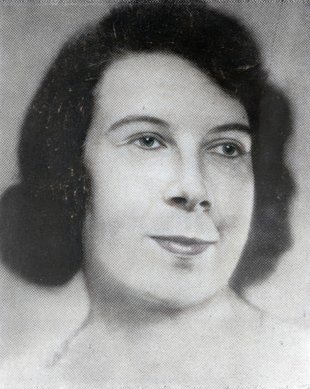
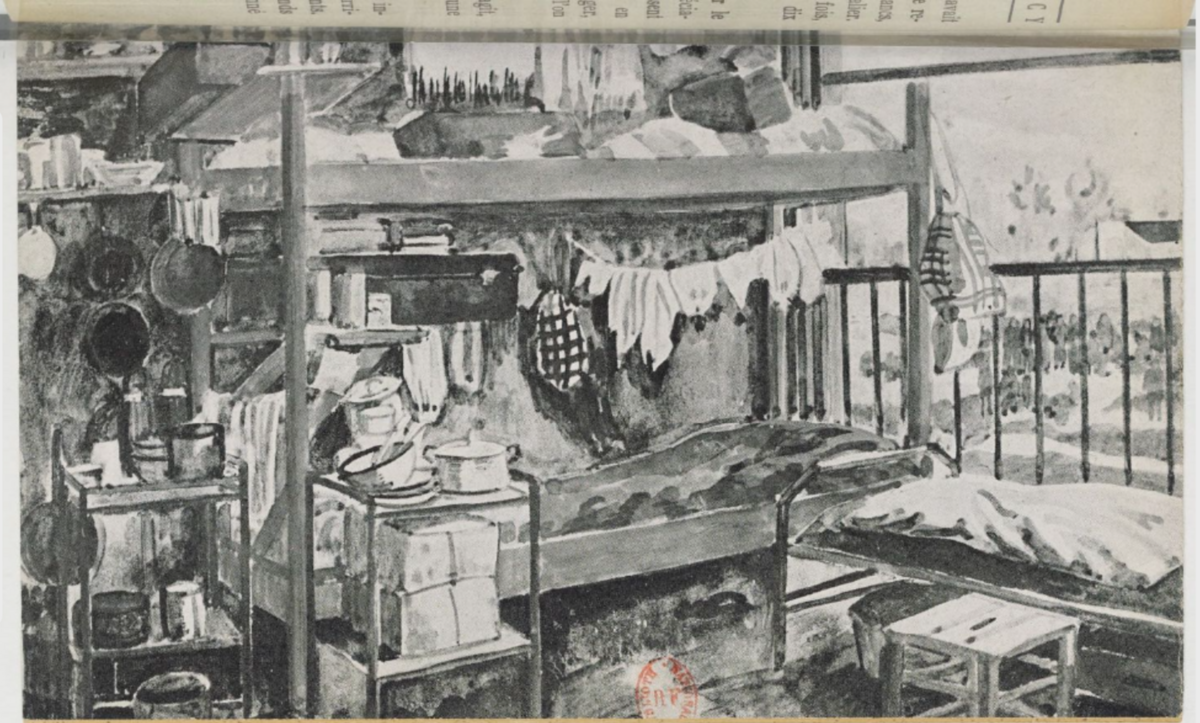
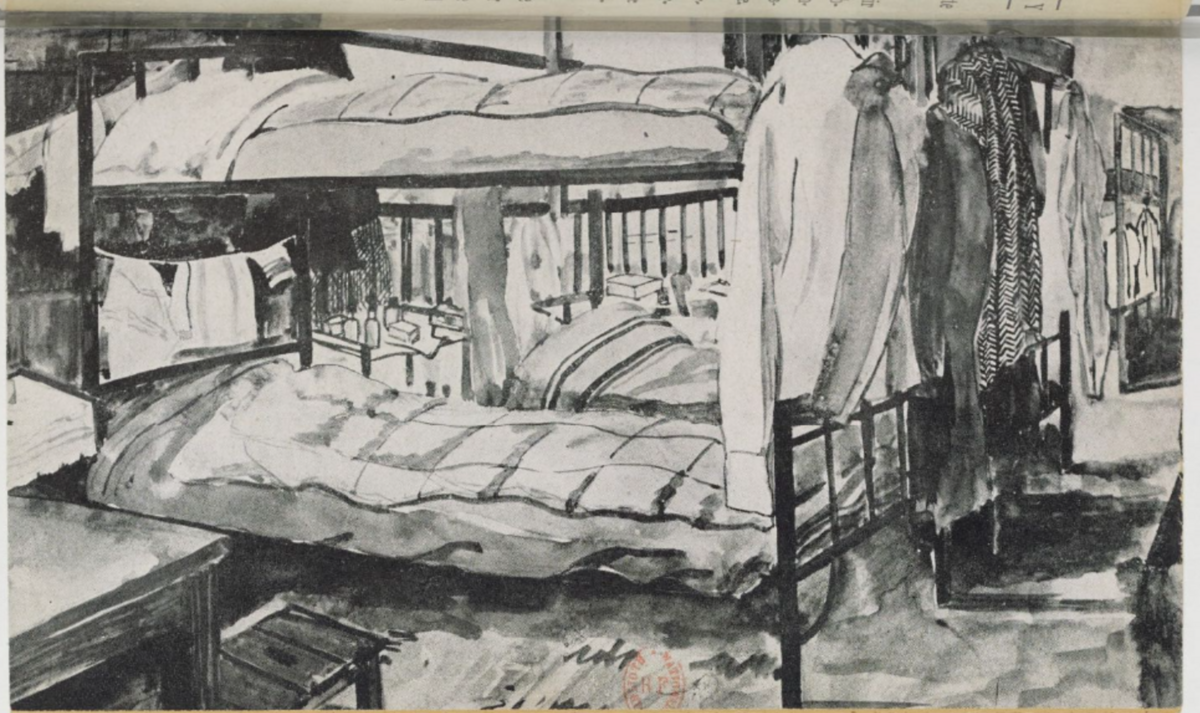
Jeanne Lévy was a French painter and ceramic decorator who spent much of her career at the Manufacture Nationale de Sèvres, the state porcelain works. Dismissed from her post under the anti-Jewish measures of occupied France, she was arrested in 1942, interned at Drancy — the transit camp outside Paris through which most Jews held in French camps were sent east — and deported to Auschwitz, where she was killed. She is known both for her pre-war work in ceramics and for a group of watercolours she painted during her imprisonment at Drancy. Those drawings survived because a Red Cross nurse kept them and published them as the illustrations to her own account of the camp, and Lévy's work is now held in Paris at the Centre de Documentation Juive Contemporaine.
Lévy was born in Paris on 28 September 1894 into an Orthodox Jewish family of Alsatian origin. She was educated at the Jewish school founded by Baron Gustave de Rothschild, showed an early interest in drawing, and at the age of eighteen entered the Académie des Arts Décoratifs in Paris to study painting. She later specialised in ceramics. From 1920 she worked as a decorator at Sèvres, where she remained on the books until 1944. (One source instead describes her as an artist at the Limoges porcelain works, but the Sèvres attribution is far better documented: the British Museum holds a Sèvres vase of 1930 that she decorated, and the 1945 book that reproduces her camp drawings identifies her on its title page as a decorator at the Manufacture de Sèvres.) In 1922 she travelled to Germany to work on the restoration of the Rashi synagogue in Worms, which was later destroyed during the Second World War.
Alongside her factory work, Lévy took part in artistic life in Paris and exhibited regularly. Her paintings were shown at the Salon des Artistes-Décorateurs, the Salon des Tuileries and the Salon d'Automne. A committed Zionist, she exhibited in 1931 in the Erez Israel (Land of Israel) Pavilion at the Exposition Coloniale Internationale in Paris. She also travelled to Palestine and showed work at the international fair in Tel Aviv, in either 1932 or 1934, depending on the source.
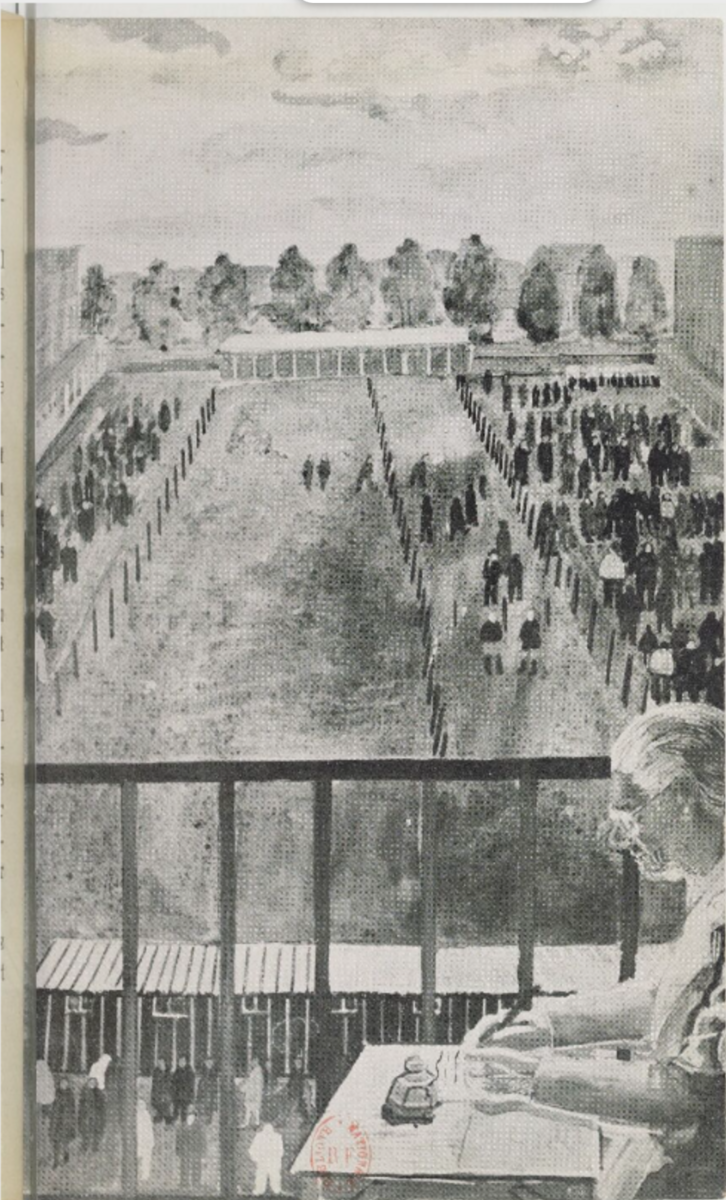
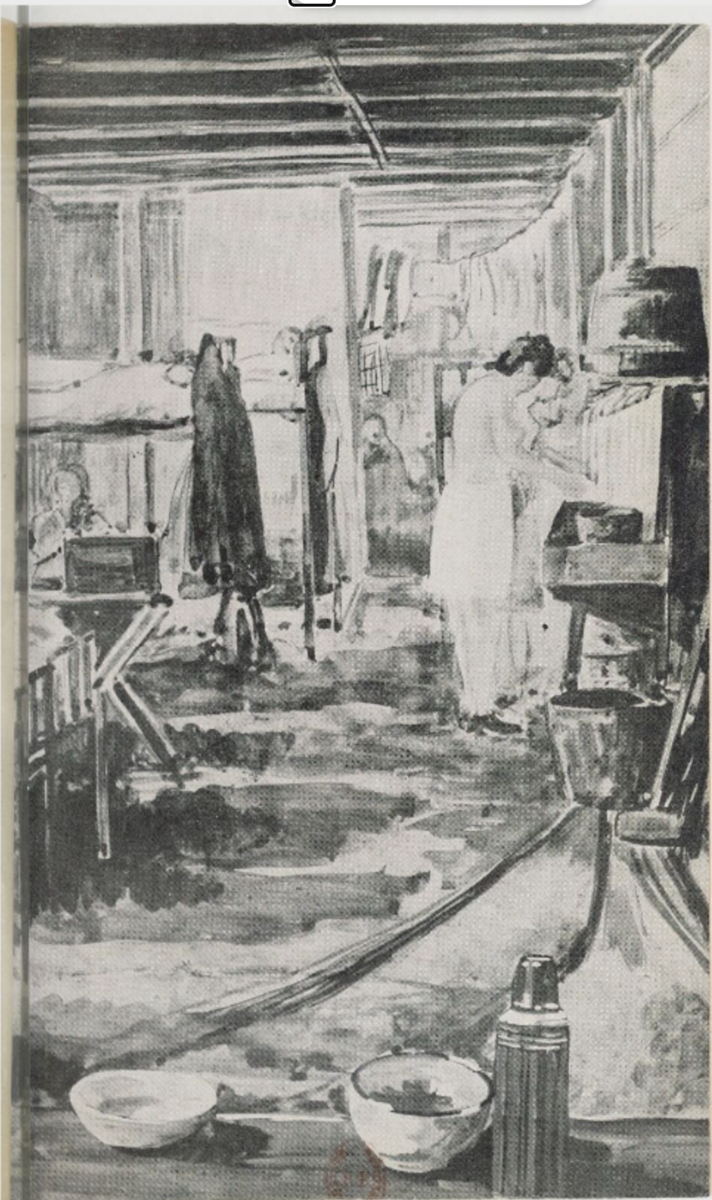
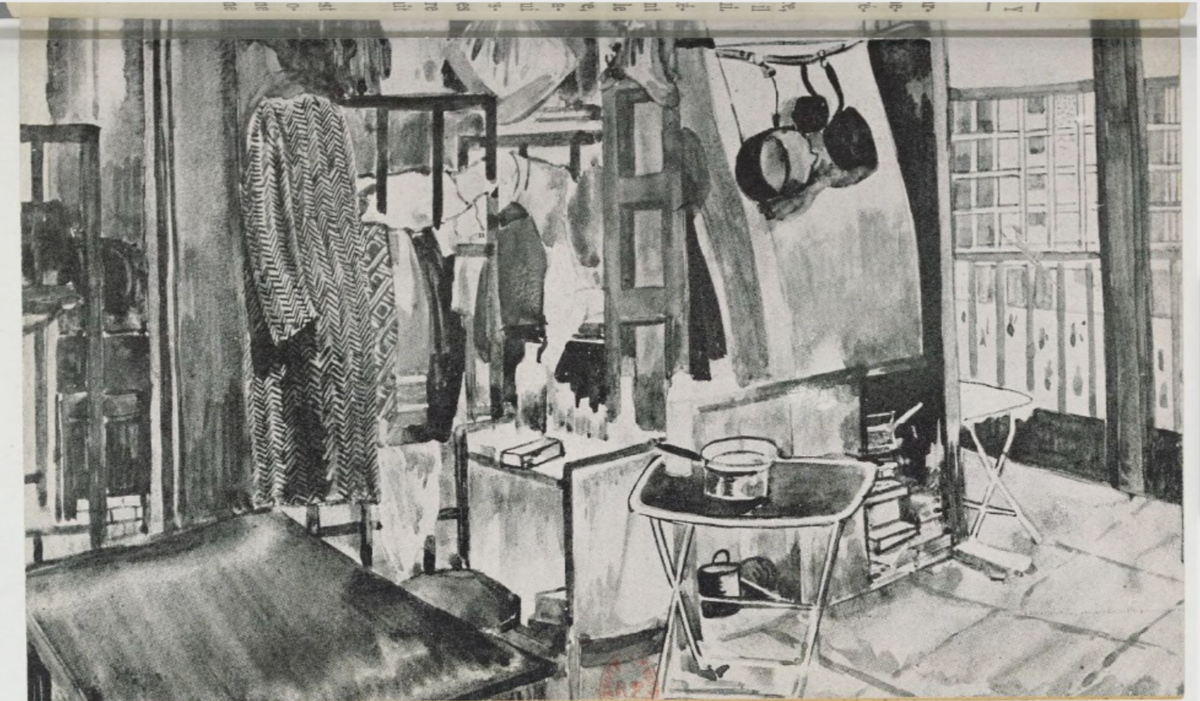
After the German invasion of France, Lévy was dismissed from Sèvres because she was Jewish. On 27 November 1942 she was arrested together with her husband, René Lévy, a painter who was deaf and mute, and held in the La Santé prison in Paris; she was then transferred to the internment camp at Drancy, on the northern edge of the city, where she was imprisoned from December 1942. At Drancy she produced a series of works on paper — watercolours and pastels — depicting everyday life in the camp, among them watercolours titled Dormitory and The Kitchen. The Kitchen shows an elderly woman in an apron seated by a stove and a second woman, seen from behind, at a table set with ordinary household objects; the scene is one of order and domestic activity. These works concentrate on the interior routines that inmates kept up despite the frequent deportations from the camp.
On 31 July 1943 Lévy was deported to Auschwitz on convoy 58, together with her husband and her younger brother, Albert Lévy, and was murdered there. Official records give her year of death as 1944, though the date is not documented. Her name appears in different forms across the records — as Jeanne Lévy, as Jane Lévy, and, in the British Museum's catalogue, as Jeanne Levy.
Lévy's Drancy work survived because it was kept by a Red Cross nurse, Julie Crémieux-Dunand, who was herself interned at the camp in 1943 and used Lévy's drawings to illustrate her documentary account of it, La Vie à Drancy, published in Paris by Librairie Gedalge in 1945. Lévy's work is now held in the archives of the Centre de Documentation Juive Contemporaine in Paris. It forms part of a small surviving visual record of Drancy, which also includes the charcoal drawings of Georges Horan, published in 1946, and the reproductions in Georges Wellers's De Drancy à Auschwitz (1946), the latter containing work by Jacques Gotko, an artist of Ukrainian origin who sometimes signed himself Gottko and who was also killed at Auschwitz.
Sources
Rosenberg, Pnina. "Art During the Holocaust." Shalvi/Hyman Encyclopedia of Jewish Women. Jewish Women's Archive, 27 February 2009. jwa.org/encyclopedia/article/art-during-holocaust (accessed 3 July 2026).
"Jeanne Levy" (biographical record BIOG73674). Collection. The British Museum. www.britishmuseum.org/collection/term/BIOG73674 (accessed 3 July 2026).
"Art by Victims and Survivors." Children of Drancy. Northeastern University. drancy.sites.northeastern.edu/art-by-victims-and-survivors/ (accessed 3 July 2026).
"Jane Lévy." Bureau d'art École de Paris. ecoledeparis.org/jane-levy/ (accessed 3 July 2026).
Contemporary accounts referenced
Crémieux-Dunand, Julie. La Vie à Drancy (récit documentaire). Drawings by Jeanne Lévy. Paris: Librairie Gedalge, 1945. Digitised copy: Bibliothèque nationale de France (Gallica).
Wellers, Georges. De Drancy à Auschwitz. Paris: Éditions du Centre de Documentation Juive Contemporaine, 1946.
Préaud, Tamara. The French Porcelain Society Sèvres Workmen's List. 2003.